An ultraviolet aurora image: read the instrument before the brightness
A scientific image can show light that a traveler’s eyes do not see, then assign display colors so the measurement becomes readable. Use an official ultraviolet aurora image to practice that distinction. The result is a clearer understanding of what a spacecraft observation contributes, without turning its processed appearance into an expectation for the naked-eye Nordic sky.
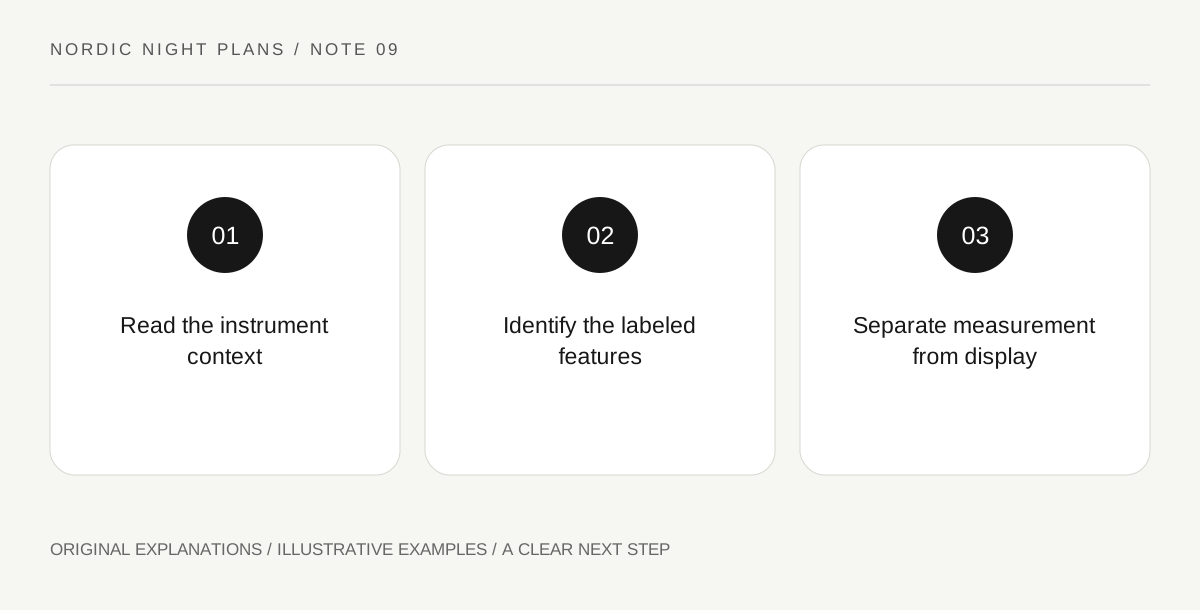
Original explanatory diagram. Read the full method and limitations below.
Identify the actual measurement
NASA’s IMAGE explanation presents an ultraviolet view of Earth’s surrounding plasma and identifies a faint auroral feature within the image. It describes a spacecraft perspective, not a holiday photograph from the ground. Begin with the instrument context and the meaning of the displayed image. Write ultraviolet in the notebook before commenting on the colors. This places the picture in the correct evidential category and prevents visual familiarity from suggesting that every bright area would look the same to a person standing outside.
Read the caption’s distinctions carefully
Identify the Earth, the surrounding represented material and the particular feature the source labels as aurora. Do not assume all luminous parts of a space image are the same phenomenon. The source may distinguish emissions or structures that a casual viewer would group together. Give each identified feature its own note, and leave ambiguous areas unassigned. The exercise is less about memorizing a spacecraft mission than about learning to let the caption define what the image shows before the eye supplies an appealing but unsupported story.
Separate display from direct appearance
Ask how the visual presentation makes the measurement understandable. Where the caption states false color or another processing convention, preserve that wording in your own explanation. Avoid treating a brighter display color as a directly comparable naked-eye brightness across unrelated instruments. A useful note explains which physical observation is represented and which visual choices communicate it. It does not need to criticize processed images; processing is often what makes an otherwise inaccessible measurement possible to examine at all.
Compare questions rather than visual drama
Write one question the space image can help investigate and another a ground observer would ask. The first might concern a large-scale feature identified by the source; the second might concern what was actually visible from a particular place. Keep them distinct without ranking one as more real. The two viewpoints can contribute different information. End with a caption that retains instrument, date and representation context so that the image remains a scientific reference rather than becoming a detached spectacular picture in a northern-lights trip folder.
Illustrative learning notebook
Illustrative annotation: a traveler saves an official IMAGE reference with its date and ultraviolet context. They mark Earth and the feature the caption identifies as aurora, leaving other bright regions under their separate source labels. The final note explains that the displayed colors communicate measurements. It makes no claim that a person outdoors would see the entire image in those colors or from that viewpoint.
Questions that come up
Does processed mean scientifically false?
No. Processing can make a measurement readable. The issue is understanding what the display represents and avoiding a mistaken naked-eye interpretation.
Can image brightness be compared across any two instruments?
Not safely from appearance alone. Instrument response, representation and context matter; use appropriate scientific explanation for a quantitative comparison.
References and scope
These sources support the factual background. Examples and exercises are original illustrative teaching material. References do not imply endorsement.
- NASA Cosmicopia: Image of Earth’s Magnetosphere — The IMAGE spacecraft ultraviolet representation, false-color context and auroral feature identified in the caption; no eye-view equivalence.