Gammelstad: ask when a historic settlement was used, not only who lived there
A cluster of small houses can invite the assumption of continuous everyday residence. Gammelstad’s church-town history asks a different question about the timing of use. Study the relationship between gathering, distance and temporary accommodation, then keep that documented historical pattern separate from the present visitor arrangements and the private life of any building you can see.
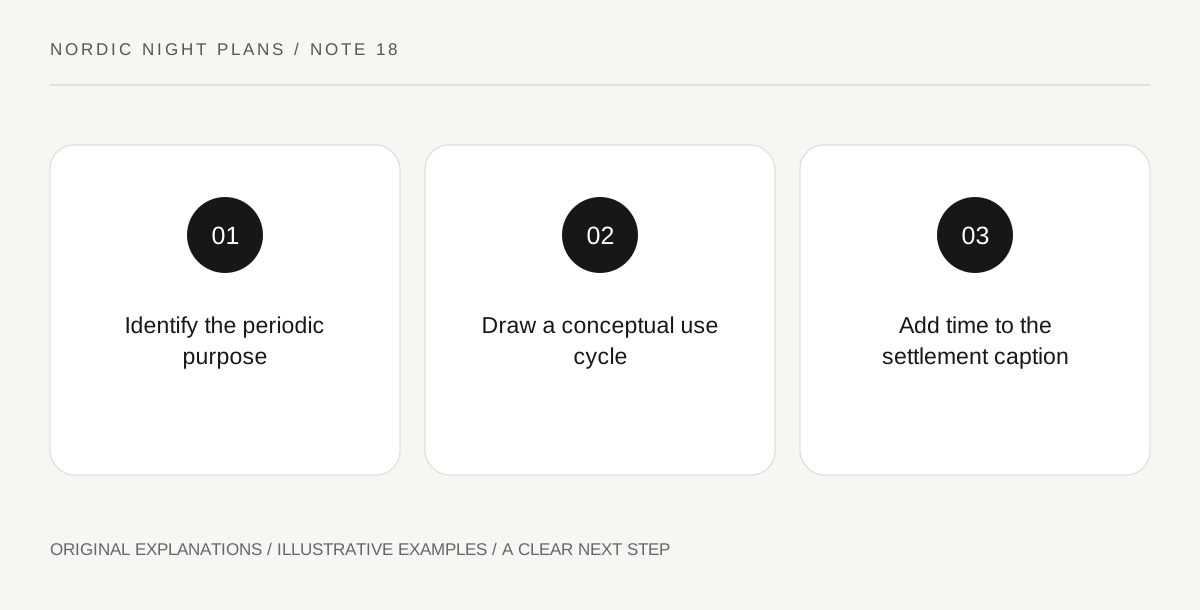
Original explanatory diagram. Read the full method and limitations below.
Let the function change the first impression
UNESCO describes Gammelstad near Luleå as a church village whose wooden houses accommodated worshippers traveling from the surrounding countryside for services and festivals. That gives the buildings a relationship to periodic gathering rather than a generic village story. Record the central institution and the historical use explained by the source. Do not assume every present house has identical use or public access. The historical function is the starting evidence, not a current accommodation listing or permission to inspect interiors.
Draw use across time instead of a route
Make a simple diagram with ordinary time, gathering time and departure as conceptual stages. Label it an interpretive aid rather than a dated reconstruction of one family’s trip. Add the source-supported role of distance and travel difficulty. This changes the question from how many houses are here to why temporary lodging mattered. Keep the diagram free of invented journey lengths, household names or exact schedules. Its purpose is to make periodic use understandable without manufacturing a detailed historical itinerary.
Observe how shared purpose organizes the ensemble
From authorized public areas, use official interpretation to identify the church and the surrounding settlement relationship. Note how the cluster can be understood as an ensemble tied to a gathering purpose. Avoid peering into windows or treating a quiet building as abandoned simply because no one is visible. The visit should respect present ownership and use. A broad spatial observation can support the historical question without requiring an interior encounter or a claim about the occupants of each particular cottage.
Write a caption with a time dimension
End with a sentence that includes when the accommodation was historically needed and why that mattered. Then add a separate sentence about what you actually observed or learned through interpretation. This time dimension distinguishes the account from a generic description of picturesque wooden houses. It also reminds a traveler that settlement history includes rhythms of arrival and departure, not only permanent population. The northern journey gains a specific social question while any aurora ambitions remain a separate part of the itinerary.
Illustrative learning notebook
Illustrative diagram: a visitor first sketches small houses as an ordinary permanent village. After reading the official account, they add a conceptual gathering-and-return cycle around the church. Their final caption explains the documented temporary-accommodation purpose. It does not invent a named family’s journey, assign current uses to individual cottages or assume that historically communal significance makes every building publicly enterable.
Questions that come up
Does a quiet cottage mean it is abandoned?
No. Visible activity is not a reliable test of ownership or use. Follow current signs and official visitor information.
Can the houses be treated as present holiday rentals?
The historical account supplies no such booking claim. Any contemporary accommodation question requires an actual provider and current terms.
References and scope
These sources support the factual background. Examples and exercises are original illustrative teaching material. References do not imply endorsement.
- UNESCO: Church Town of Gammelstad, Luleå — The church-village relationship and periodic accommodation of distant worshippers; no present cottage use, rental or access claim.